
2026 Student Mobility Training Program Award Recipients
SDGs@UofT is pleased to announce the recipients of the 2026 SDGs Student Mobility Training Program.
The Sustainable Development Goals (SDGs) Student Mobility Training Program aims to support top graduate students to conduct interdisciplinary research that advances knowledge and action on the United Nations’ 17 Sustainable Development Goals. The program seeks to provide opportunities for graduate students to work on research projects outside of their home discipline. Graduate students (master’s and PhD students) will work under the supervision of an SDGs@UofT affiliate or fellow with the SDGs@UofT Institutional Strategic Initiative (ISI) at institutions around the world.
Awarded Projects
Anna Micaela Ostry, PhD, Ontario Institute for Studies in Education
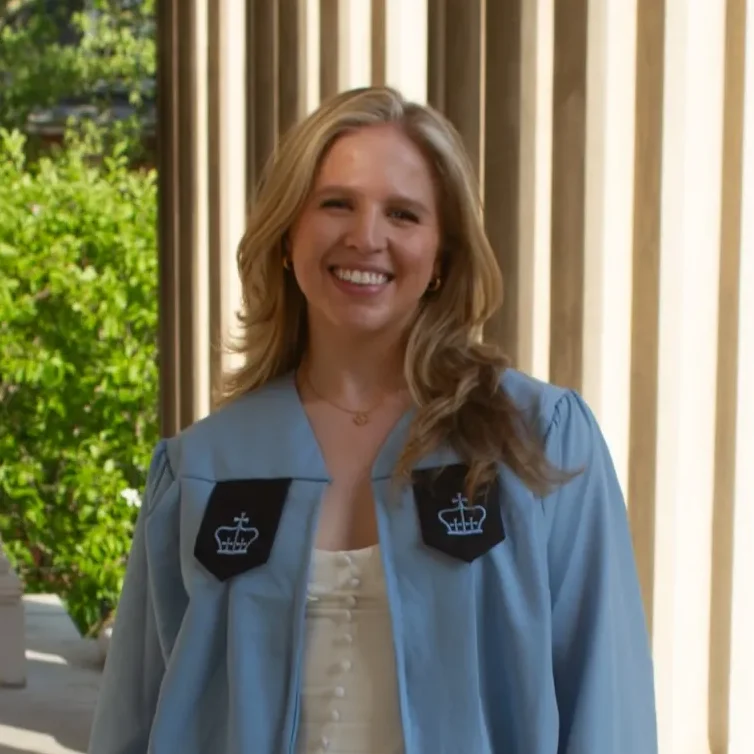
Variability in Children’s Cognitive and Metacognitive Development and Its Implications for Learning
Despite expanded global access to schooling (UNESCO, 2024), a persistent learning crisis threatens progress toward Sustainable Development Goal 4 (SDG 4: quality education), particularly Targets 4.1 (learning outcomes) and 4.5 (equity). Millions of children complete primary education without achieving minimum proficiency in literacy and numeracy (UNESCO, 2024; United Nations, 2021), revealing a structural disconnect between schooling and learning. Addressing this crisis requires stronger alignment between education systems and the science of learning.
UNESCO’s Global Alliance on the Science of Learning for Education was established to rebuild feedback loops between research and implementation. The Global Alliance brokers knowledge among scientists, policymakers, and practitioners to inform curriculum reform and system-level transformation. This project is supervised by Dr. Kaja Jasińska (University of Toronto) and Dr. Grégoire Borst (Université Paris Cité), both founding members of the Global Alliance, situating the project directly within this international knowledge-brokering network.
Through cross-national collaboration between Canada and France, the project will generate longitudinal evidence on language, executive function, and metacognition - core developmental processes underlying learning trajectories and amenable to intervention in support of equitable educational practices (UNESCO, 2024). By establishing construct comparability across educational contexts, the study advances SDG 4’s emphasis on quality and equity. It contributes to SDG 17 by strengthening sustained international research collaboration and producing transferable assessment frameworks that inform evidence-based reform. The integration of behavioural measures with functional near-infrared spectroscopy (fNIRS), a school-compatible neuroimaging method, further advances tools for identifying developmental variability in naturalistic settings.
Aligned with the University of Toronto’s Interventions and Instruments for Sustainability theme, this initiative strengthens the infrastructure to translate learning science into equitable, developmentally responsive education systems aligned with SDG 4 and the 2030 Agenda.
Supervisor: Dr. Kaja Jasińska
Ashley Manuel, PhD, Ontario Institute for Studies in Education

Ontario: A Place to Grow? Study Abroad Decisions from Punjab and Kerala, India
This project examines shifts in prospective Indian students’ decision-making in response to evolving synergies among educational access and quality, employment opportunities, and migration pathways in Ontario’s college sector. For over a decade, Canada’s international education system, especially Ontario’s college sector, has looked to India to offset funding cuts, sustain enrolments and drive economic growth through the three-step ‘study, work, and stay’ migration model known as edugration. However, the federal study permit restrictions introduced in 2024 triggered a 75 percent decline in application within a single year. Given that student choices respond directly to policy, cost, and perceived opportunity, this qualitative study investigates the study destination decisions of prospective international students from two key Indian sending states, Punjab and Kerala, as they consider Ontario and Canada more broadly.
The study engages with four student recruitment agencies in India (two per state) in two phases. The first phase analyzes promotional materials, including social media, to examine how Canada and Ontario colleges are portrayed. The second phase consists of focus groups with recruitment agents and interviews with prospective students to understand their perceptions of Ontario, Canada as a study destination.
Through academic publications and conferences, this research will inform Canadian governments and post-secondary institutions on how international student recruitment models can adapt to support students’ educational, work, migration and overall economic prospects during and after their studies, particularly for those who remain in Ontario.
Supervisor: Dr. Elizabeth Buckner
Duy Dinh, Doctor of Medicine, Temerty Faculty of Medicine

Bridging Law and Lived Experience: Exploring LGBTQ+ Family Inclusion and Same-Sex Marriage Implementation in Thailand
Lesbian, gay, bisexual, transgender, queer and other sexual and gender minority (LGBTQ+) people make up an estimated 9% of the world’s population but are only partial citizens. While momentum has grown to advance legal protections for LGBTQ+ communities in Asia—most notably, with the recent legal recognition of same-sex marriage in Thailand (2025)—enduring systemic discrimination continues to shape and constrain the lives of LGBTQ+ communities. Recent advances in equal marriage in Thailand create a timely opportunity to examine how legal recognition is translated into lived inclusion.
This qualitative, community-partnered study will document experiences of equal marriage policy implementation in Thailand in real time, supporting the measurement of inclusion within the SDGs framework (SDG Thematic Area 2). Guided by the Capability Approach and queer theory, this project will assess the space between legislated rights and the ability to access those rights in practice. Through a focused literature and policy scan, key informant interviews conducted in partnership with VOICES-Thailand Foundation, and reflexive thematic analysis, the study will identify implementation successes, gaps, and priority actions. Findings will generate culturally responsive recommendations to strengthen equitable access to marriage- and family-related rights and inform inclusive, sustainable development.
Supervisor: Dr. Peter A. Newman
Kendi Dyck, Masters, Faculty of Arts and Science

Beyond Carbon: Community Wellbeing in the Chyulu Hills REDD+ Project
This community-centred research project investigates the impacts of the Chyulu Hills REDD+ carbon project on the wellbeing of local Maasai communities in Kenya. As carbon markets expand globally, they are promoted as "triple-win" solutions for climate, conservation, and communities. However, critical gaps remain in understanding the lived, on-the-ground experiences of the Indigenous peoples who host these projects.
Using qualitative ethnographic methods—including participant observation, semi-structured interviews, and participatory photovoice—this study explores four key dimensions: the nature and meaning of community participation; the lived experience of benefit sharing; shifts in access to and control over land and natural resources; and the integration of cultural and traditional knowledge into project governance.
By foregrounding Maasai perspectives and community-defined understandings of wellbeing, this research moves beyond technical project metrics to reveal the social realities of carbon offsetting. Situated within critical scholarship on environmental justice and African land ethics, the project contributes original empirical data from a Kenyan case study to global debates on equitable climate governance. The findings aim to inform more accountable and socially just design and implementation of nature-based climate solutions, ensuring that local voices and rights are central to the global response to climate change.
Supervisor: Dr. Kariuki Kiriga
Lola Oyefeso, Masters, Temerty Faculty of Medicine

Accuracy to Accountability: Advancing Responsible Clinical AI through Combined Metrics of Performance, Equity, and Sustainability in Canadian Health Systems
Artificial intelligence (AI) is increasingly embedded in clinical care, but health systems still evaluate it in fragmented ways, emphasizing average performance while treating equity and environmental sustainability as optional or separate. This makes it difficult to manage SDG trade-offs in practice: a model can improve efficiency (SDG 3) while widening inequities through health data poverty (SDG 10) and increasing emissions and resource burdens (SDGs 12 and 13), undermining accountable institutions and public trust (SDG 16). Aligned with the SDG theme “Exploring Dynamic Synergies among the SDGs,” my research treats accountability as a coupled system where gains in one domain can create harms or constraints in another.
This travel award supports a 12-week exchange at the University of Melbourne’s Validitron, a simulation-based digital health evaluation facility, to conduct the applied co-design component of my thesis. During the visit, I will (1) facilitate structured co-design workshops with multidisciplinary stakeholders to refine an integrated scorecard prototype that links clinical performance, equity, and sustainability into decision-relevant guiding questions and minimum reporting expectations; (2) use simulation-informed workflow mapping with standardized scenarios and patient actors to identify where AI outputs surface, key handoffs and failure points, and what evidence is realistically measurable in practice; and (3) specify practical feasibility guardrails, including SGBA+ aligned subgroup reporting rules and transparent sustainability estimation assumptions (for example, energy and carbon per prediction ranges).
Deliverables from the exchange include a refined scorecard prototype, documented workflow and feasibility findings, and a synthesis of cross-domain synergies and trade-offs to inform subsequent stakeholder validation and manuscript preparation.
Supervisor: Dr. Heather Ross
Soha Naveed, PhD, Ontario Institute for Studies in Education
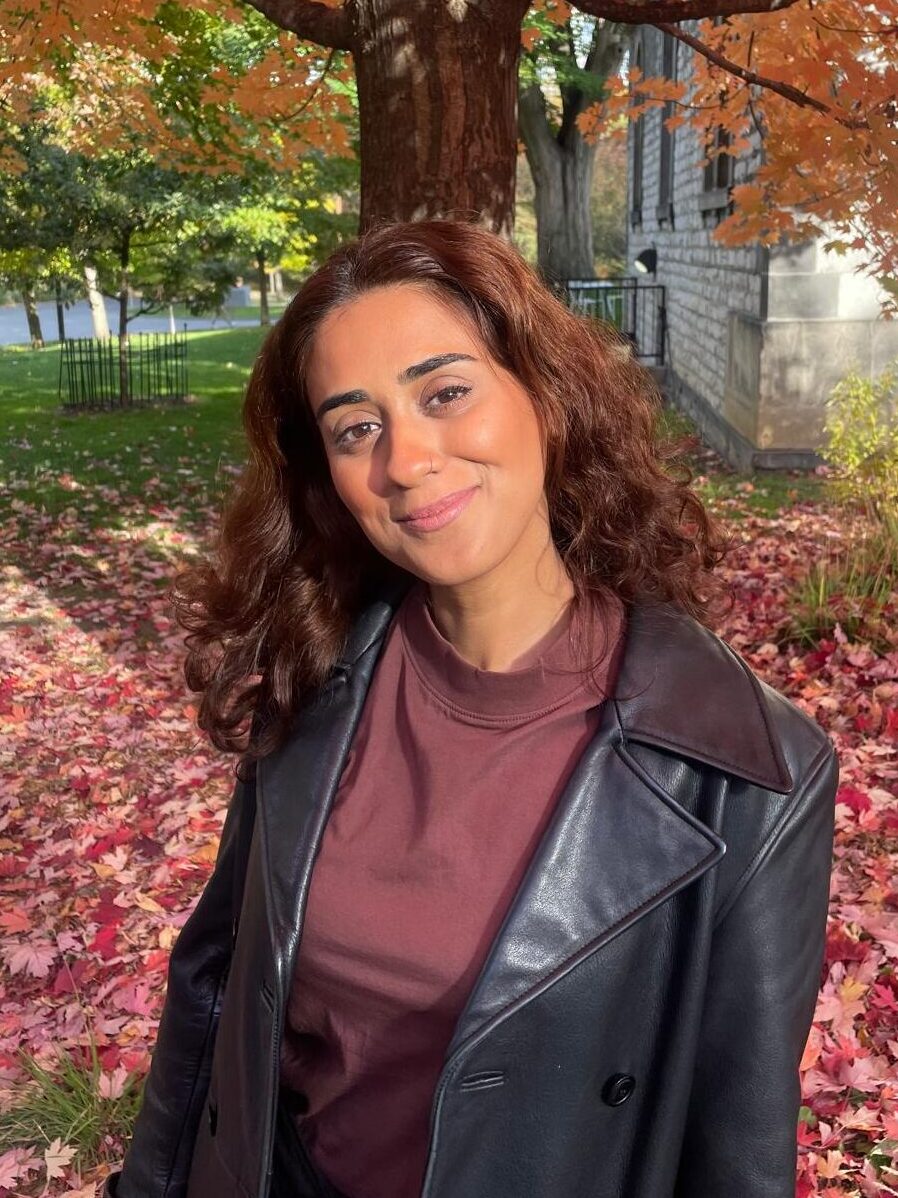
Be My Guest: Podcasting, Queer Joy, and Mehman Nawazi
This doctoral research project explores South Asian diasporic communities in Canada through the creation of a podcast that cultivates joy, resilience, and collective care. While community-building efforts have historically created important spaces for connection and solidarity, they have not always captured the full diversity of lived experiences shaped by race, class, migration, and colonial histories. In parallel, dominant scholarship, including work in diaspora and queer studies, has often approached South Asian communities in ways that overlook internal differences and knowledge systems rooted in the Global South.
This project responds to these gaps by centering Desi Joy as a political, affective, and relational practice. It moves away from extractive approaches to knowledge production and instead draws on mehmaan nawazi, the South Asian ethic of hospitality, hosting, and care as a decolonial research methodology. In this context, joy is understood not simply as an emotion, but as a social practice that sustains community, encourages participation, and offers resistance to structural challenges, particularly for those navigating layered forms of marginalization.
Using a qualitative, multi-phase approach, the research combines critical media analysis, podcast production, and community evaluation. It examines existing South Asian diasporic podcasts (including those engaging with gender and sexuality), develops three pilot episodes grounded in community care, and assesses their impact through participatory methods that engage community members as collaborators in the process. By foregrounding storytelling within South Asian diasporic contexts, this project contributes to scholarship on diasporic media, ethical archiving, and multicultural inclusion, while also engaging conversations within queer studies. It offers practical insights for activists, researchers, and policymakers seeking to build more inclusive and supportive digital spaces in Canada.
Supervisor: Dr. Megan Boler